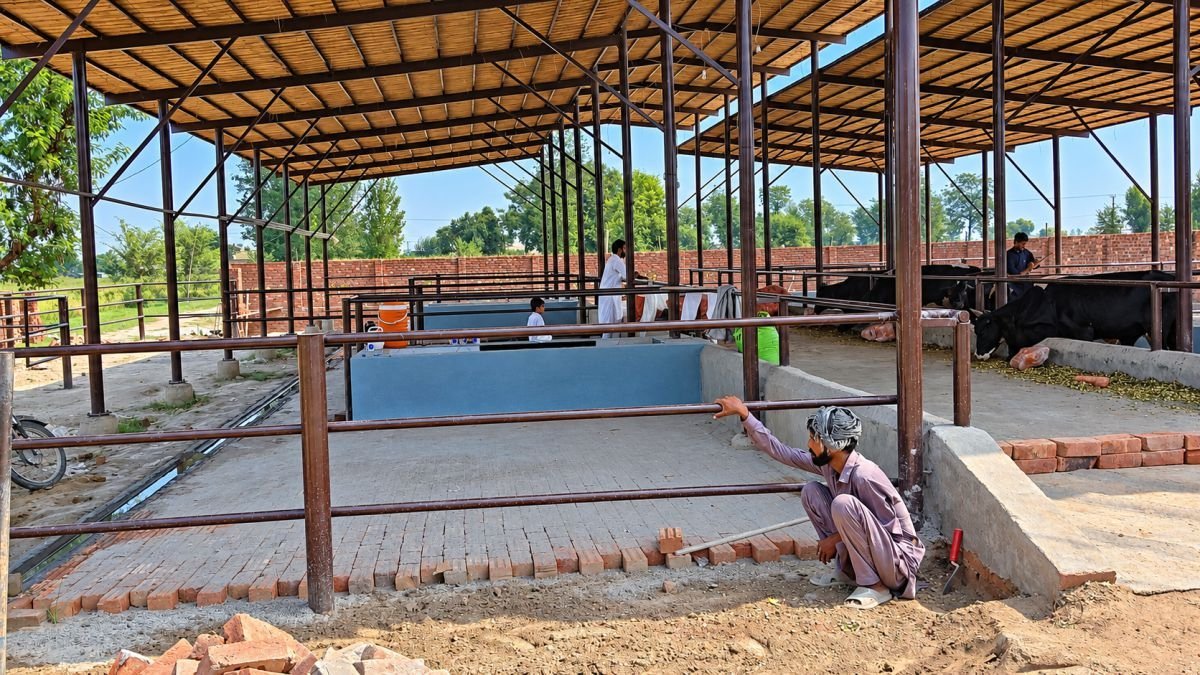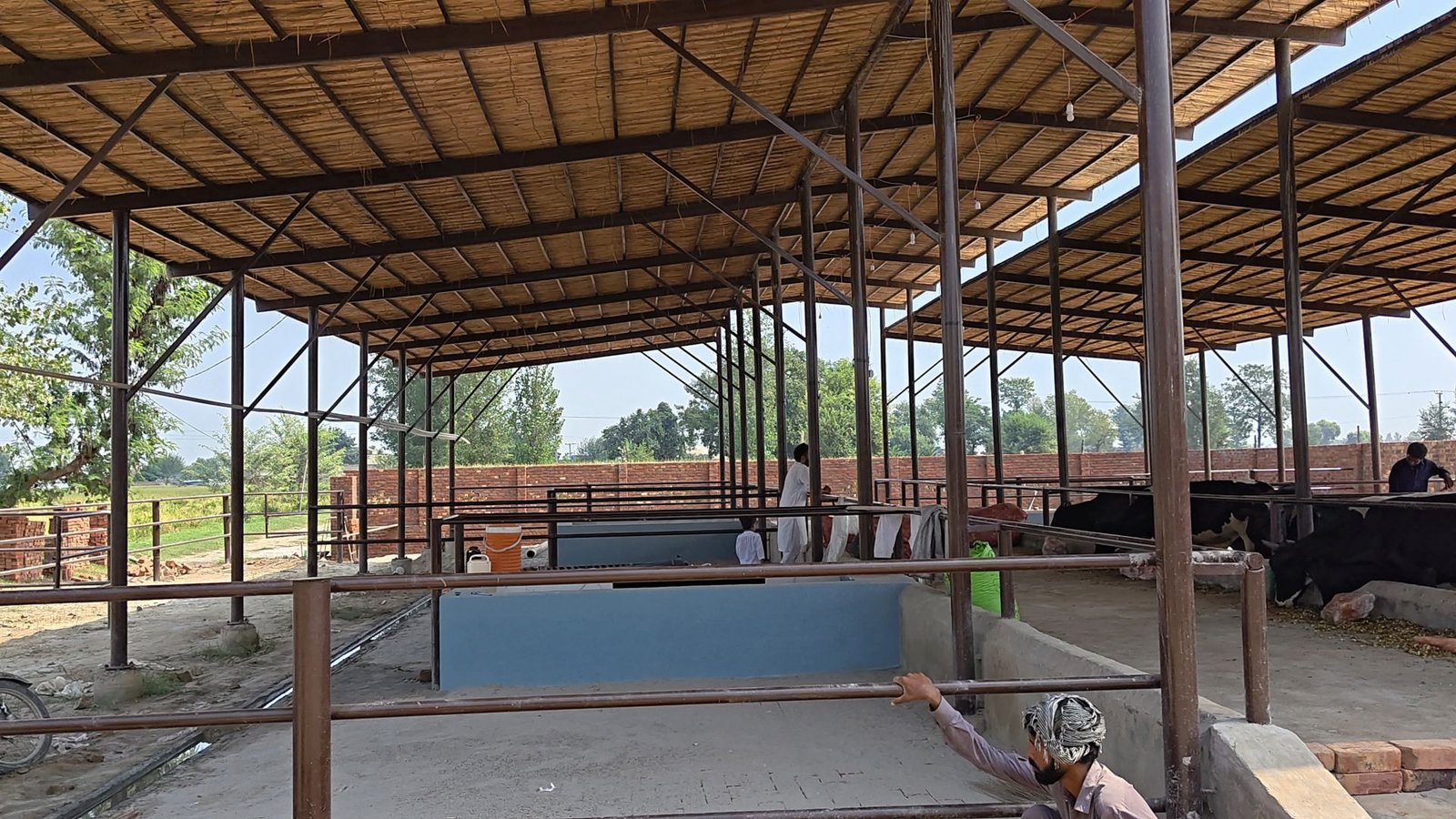
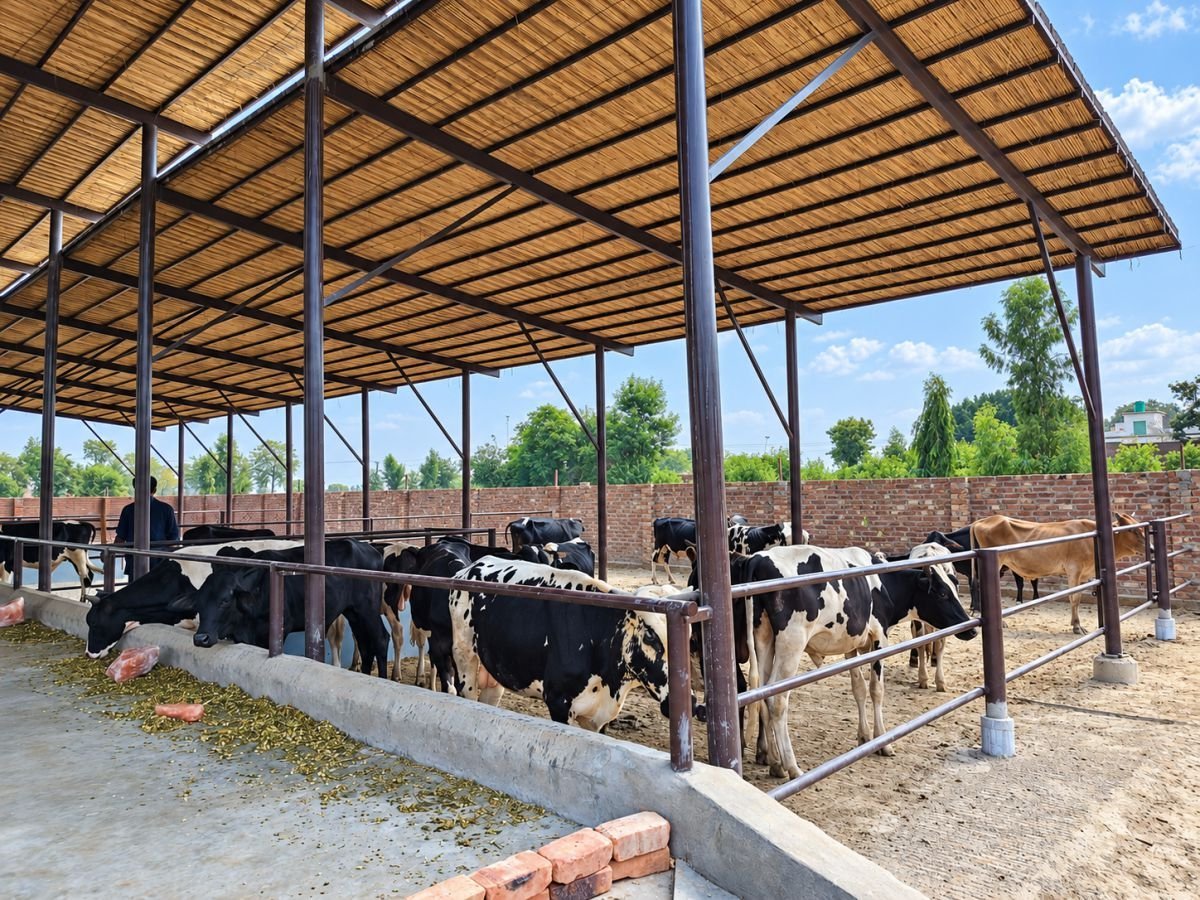
If there is one moment that sums up a day on our farm, it is mealtime at the feed lane: fresh fodder laid out along the concrete lane, and the herd lined up under the shade of the shed roof.
Feeding is the centre of each stay
Feeding routines form a central part of our livestock management process during the animals’ stay at the farm. Over roughly three to four months, managed feeding is a big part of what prepares an animal for commercial supply.
Mealtime tells you a lot. An animal that eats well and moves well is usually an animal that is doing well.
— Shahzad Latif, Partner · Livestock Care
The routine behind mealtime
Fresh fodder is laid out along the feed lane every morning, before the first observation round. Because animals are kept in suitable pens and groups, feeding is easier to manage and every group gets its share.
- Fresh fodder — laid out along the feed lane every day.
- Grouped pens — make feeding orderly and easier to manage.
- Water close by — troughs in every pen, washed and refilled daily.
- Watching while they eat — mealtime is a good moment to notice changes in behaviour.
Feeding works with everything else
Feeding never stands alone. It sits alongside water management, pen and group management, routine cleaning, daily observation and organised farm records. Together, these routines keep the animals organised, observed and properly managed throughout the cycle.

Shahzad Latif
Partner · Livestock CareLeads daily feeding, health checks, and hands-on care across the herd.