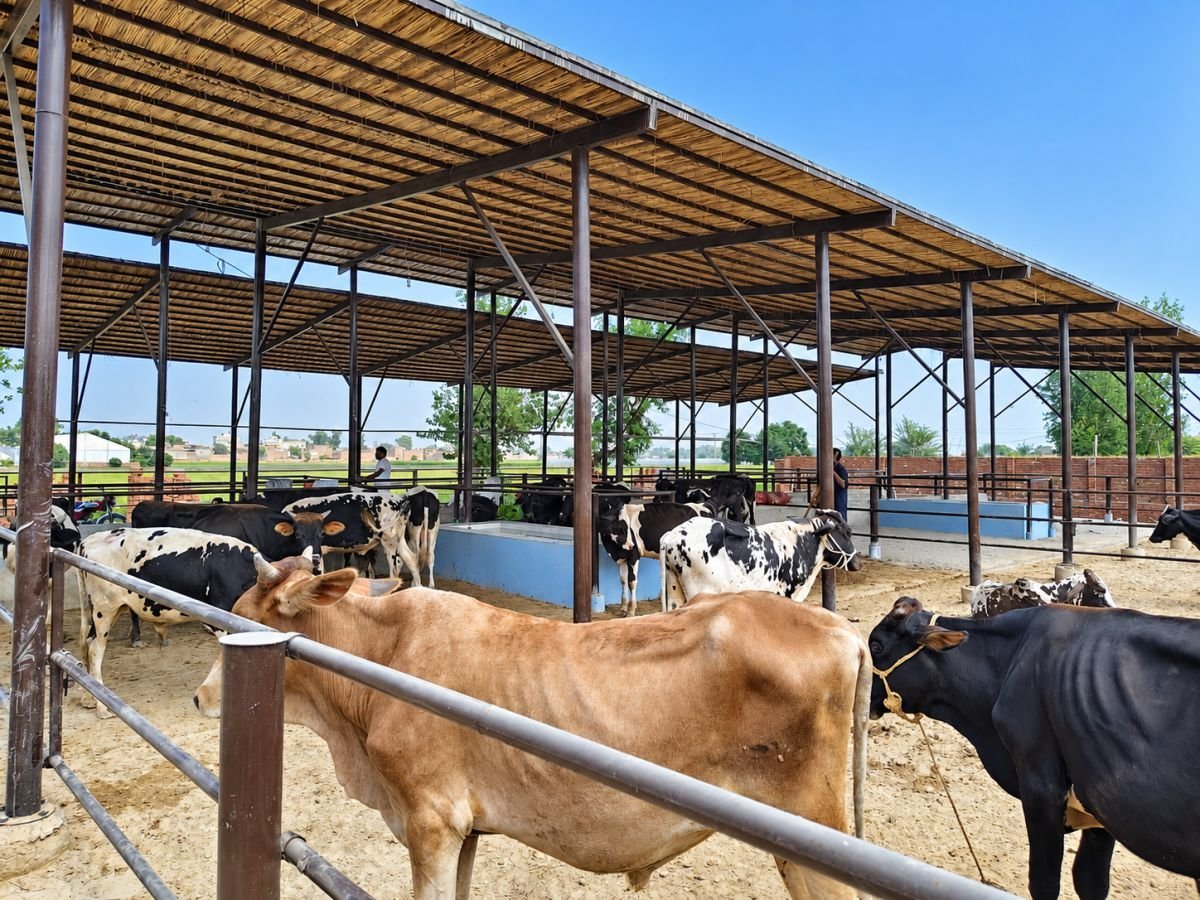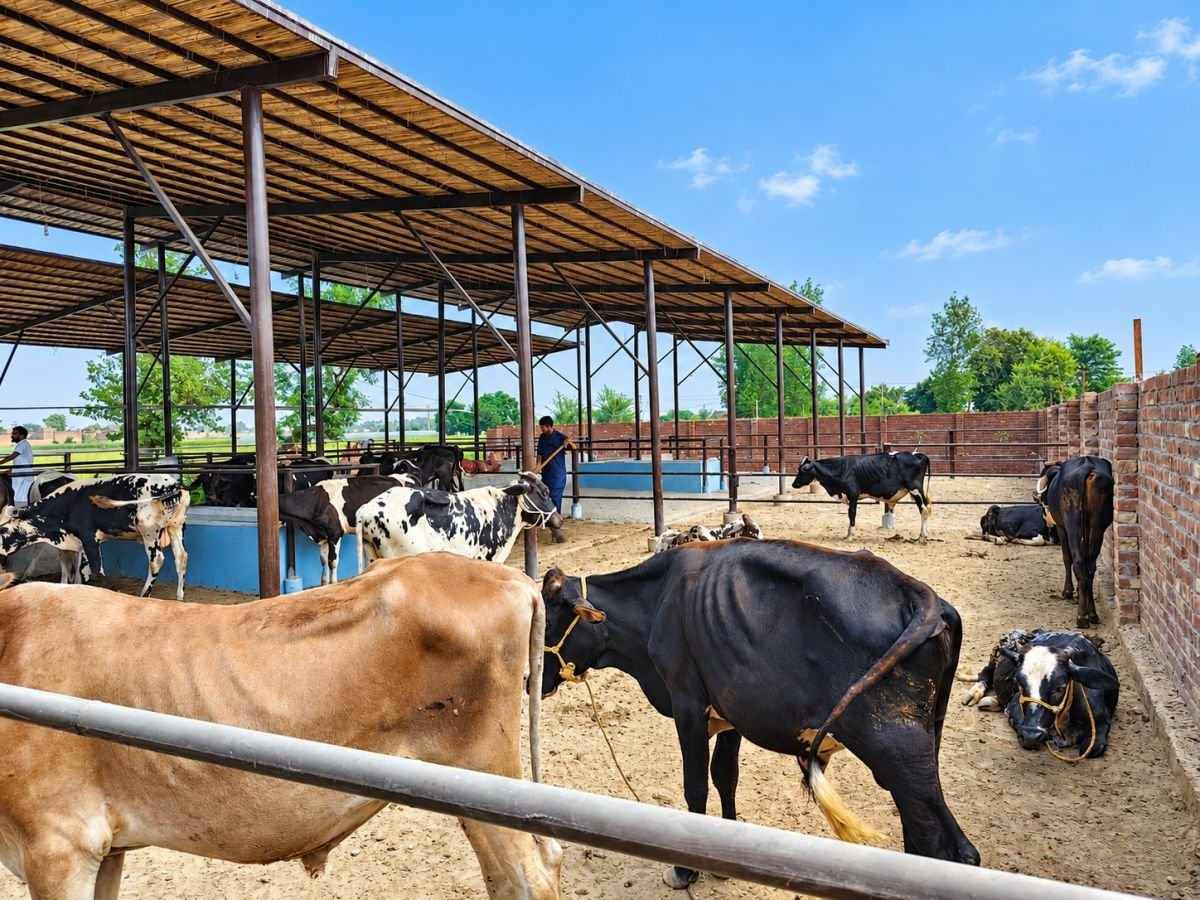
Every animal at Latif Sons Dairy Farm moves through the same practical cycle. It starts at the livestock mandi, ends with a commercial buyer, and in between come about three to four months on the farm.
Why the time on the farm matters
Our business model includes an important stage between purchasing and selling livestock: farm management. During this period, animals remain under our care while our team manages everyday farm operations and monitors their progress toward commercial requirements.
That is what makes the farm more than simply buying and reselling livestock. Animals generally stay approximately three to four months, depending on their condition and commercial requirements. It is a quiet, patient stretch of work — and it is where most of the value is built.
“The farm is the quiet stretch of work between buying an animal and selling it ready. That stretch is where the value is built.” — The Latif Family
Stage by stage: the ten steps
Every animal entering the farm moves through the same ten steps, in this order. None of them are dramatic on their own; together they are what makes an animal ready for a commercial buyer.
Livestock Sourcing
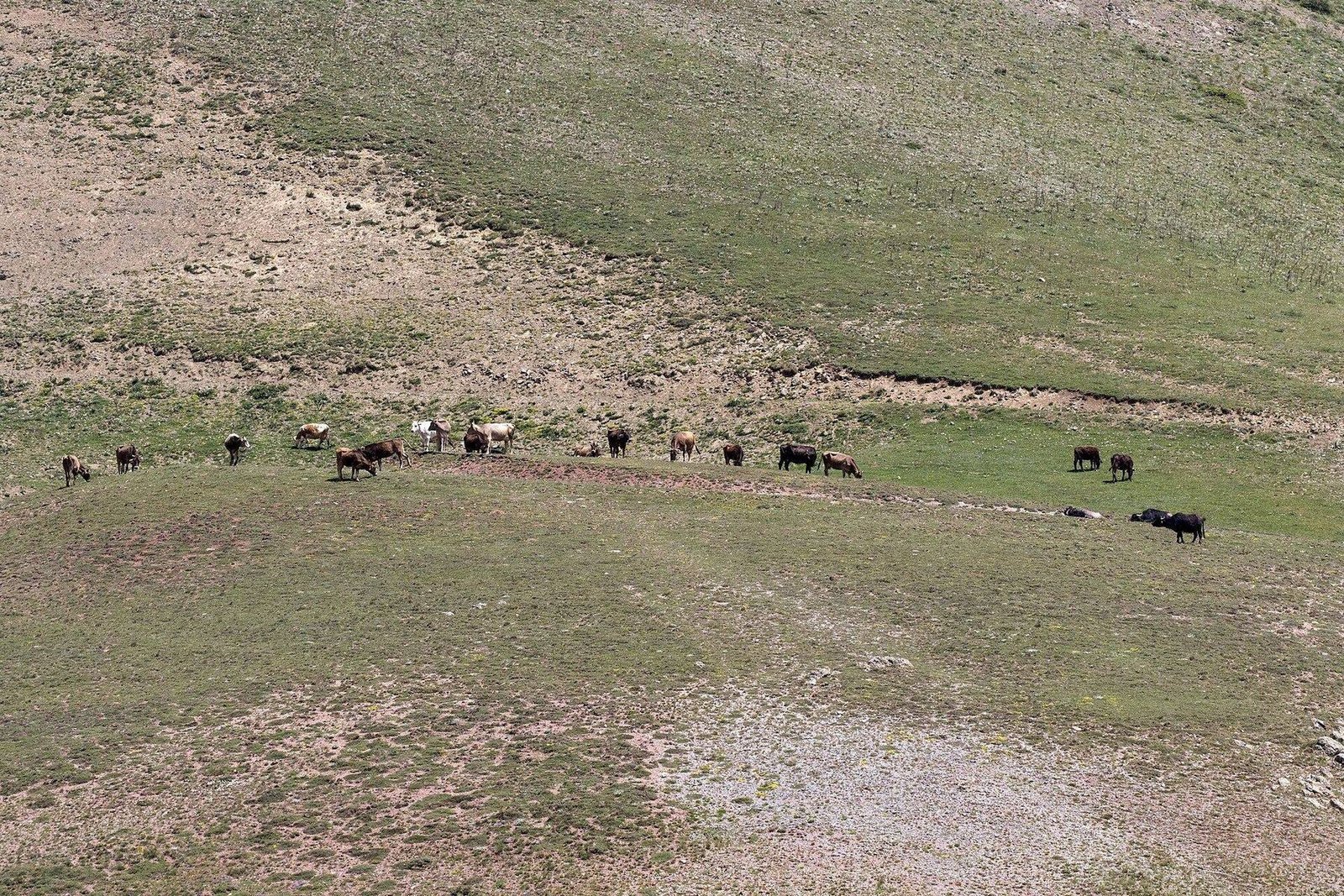
We explore livestock mandis and work with trusted sellers to identify animals that may be suitable for our farm operation.
Animal Selection
Animals are considered according to factors such as overall condition, health, structure, size, age, and suitability for the planned farm cycle.
Purchase & Transportation
Selected livestock is purchased and transported to Latif Sons Dairy Farm.
Farm Intake
New livestock is introduced into the farm operation and assigned to suitable pens or groups for easier management.
Feeding & Daily Care
Animals receive managed feeding, access to water, routine cleaning, and regular observation throughout their stay.
Progress Monitoring
Our team observes livestock condition and progress during the farm cycle so management decisions can be made more effectively.
3–4 Month Farm Cycle
Animals generally remain under farm management for approximately three to four months, depending on their condition and commercial requirements.
Commercial Preparation
As animals progress through the cycle, their overall condition and suitability for commercial sale are reviewed.
Buyer Coordination
Commercial requirements, livestock availability, farm visits, collection, and other details can be discussed directly with interested buyers.
Commercial Supply
Suitable animals are supplied to slaughterhouses, meat buyers, livestock traders, and other commercial buyers.
Livestock management involves more than simply feeding animals and waiting for time to pass. It is observation, repetition and quiet discipline, every single day.
— Sarfraz Latif, Managing Partner
What a normal day looks like
The time livestock spends at our farm is an important part of our business model, so every day follows regular routines that keep the animals organised, observed and properly managed. These are the parts that repeat, morning after morning.
- Managed feeding — feeding routines are the centre of each animal’s stay.
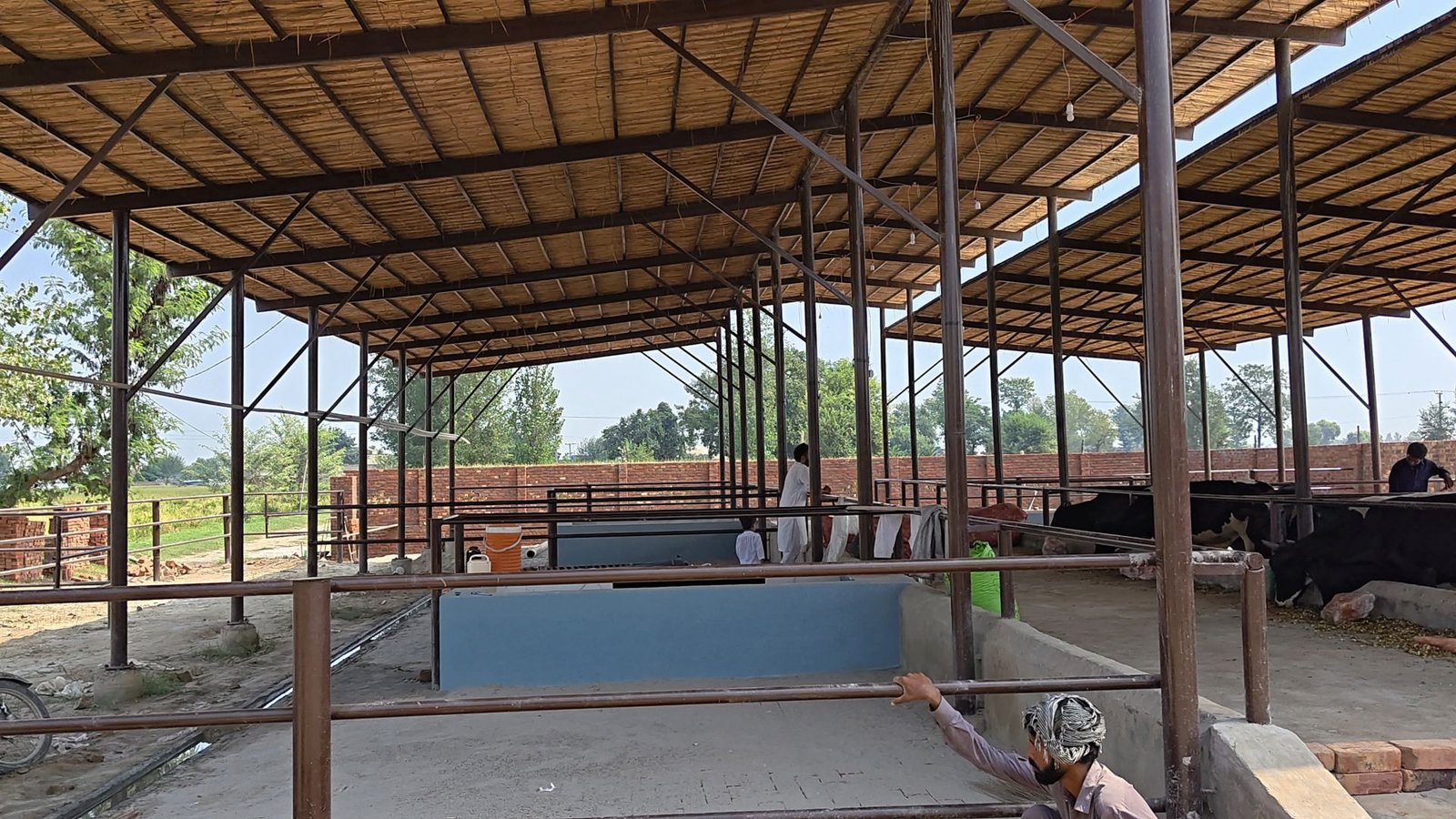
- Water — blue troughs in every pen, washed and refilled daily.
- Pens & groups — animals organised into suitable groups for easier management.
- Cleanliness — routine cleaning keeps a better environment for the livestock.
- Observation — regular checks on changes in condition and general behaviour.
- Records — organised farm records support more informed decisions.
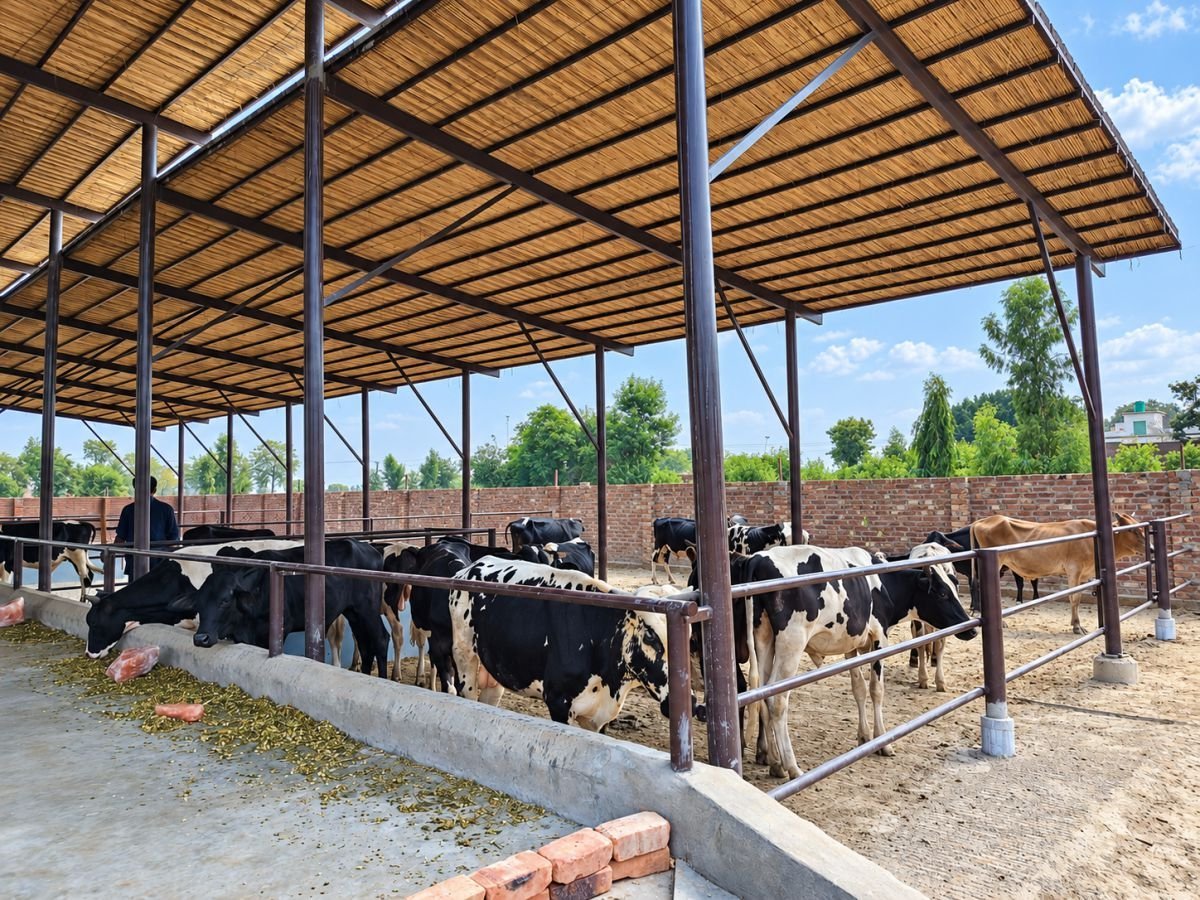
The sheds, feed lane, troughs and sand yards all sit on one piece of land in Hujra Shah Muqeem, open daily from 6:00 AM.
See how the farm runs →How progress is monitored
Throughout the cycle, our team observes the overall progress and condition of the animals, so we can see how they respond to farm management. The work happens on four quiet levels at once.
- Condition monitoring — animals are routinely observed throughout their stay.
- Growth observation — progress shows how livestock is responding over time.
- Management attention — slower or unusual progress gets closer observation.
- Commercial review — later in the cycle, suitability for buyers is reviewed.
Better observation supports better farm management — and more practical decisions when the time comes to prepare an animal for sale.
When animals are ready for buyers
When animals are suitable for commercial sale, buyer coordination begins. Slaughterhouses, meat buyers, livestock traders and bulk commercial buyers can talk directly with our team about four kinds of thing:
- Livestock requirements and animal types.
- General availability and commercial quantities.
- Farm visits for serious buyers, where appropriate.
- Pricing, collection arrangements and future supply.
Slaughterhouses, meat buyers, traders and bulk buyers can discuss animal types, quantities, farm visits and collection with the farm itself.
Talk to buyer relations →Availability changes through the farm cycle, so the best first step is a direct conversation. WhatsApp the farm or call 0306 1364383 — you will always deal with a Latif directly.

Altaf Latif
Partner · Media & OutreachRuns the farm’s channels and keeps buyers updated on the animals available at each stage of the cycle. Writes most of the Farm Journal straight from the sheds at Hujra Shah Muqeem.