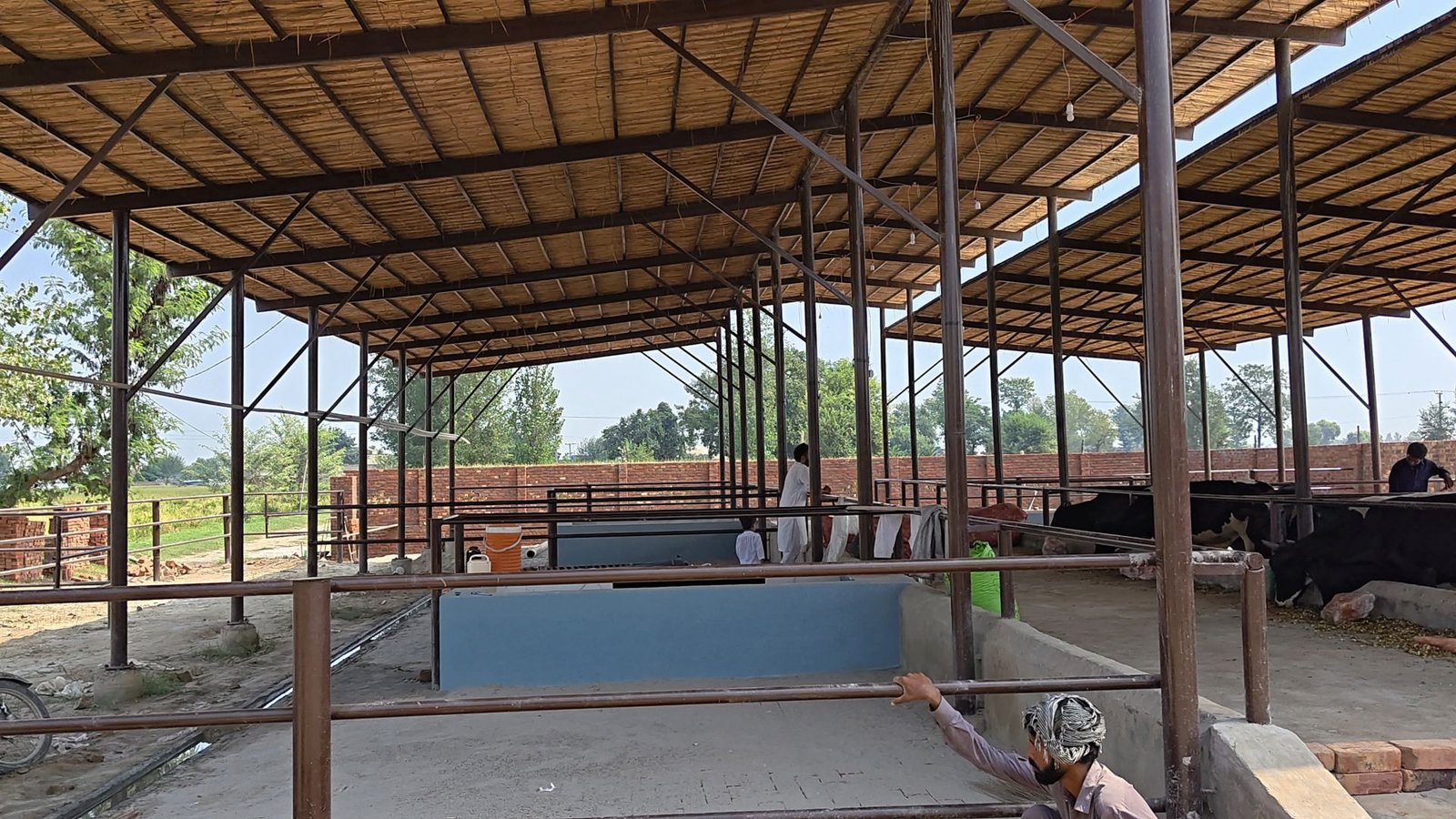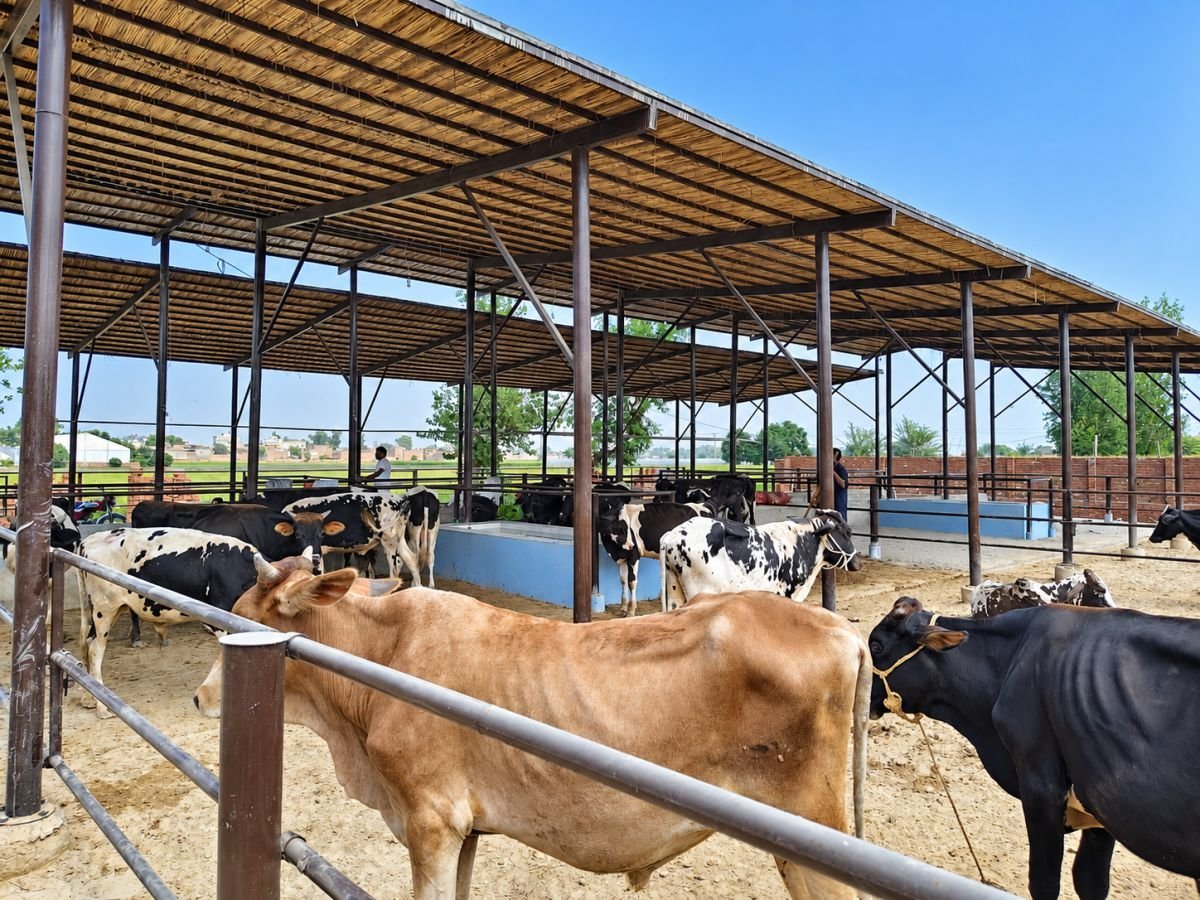
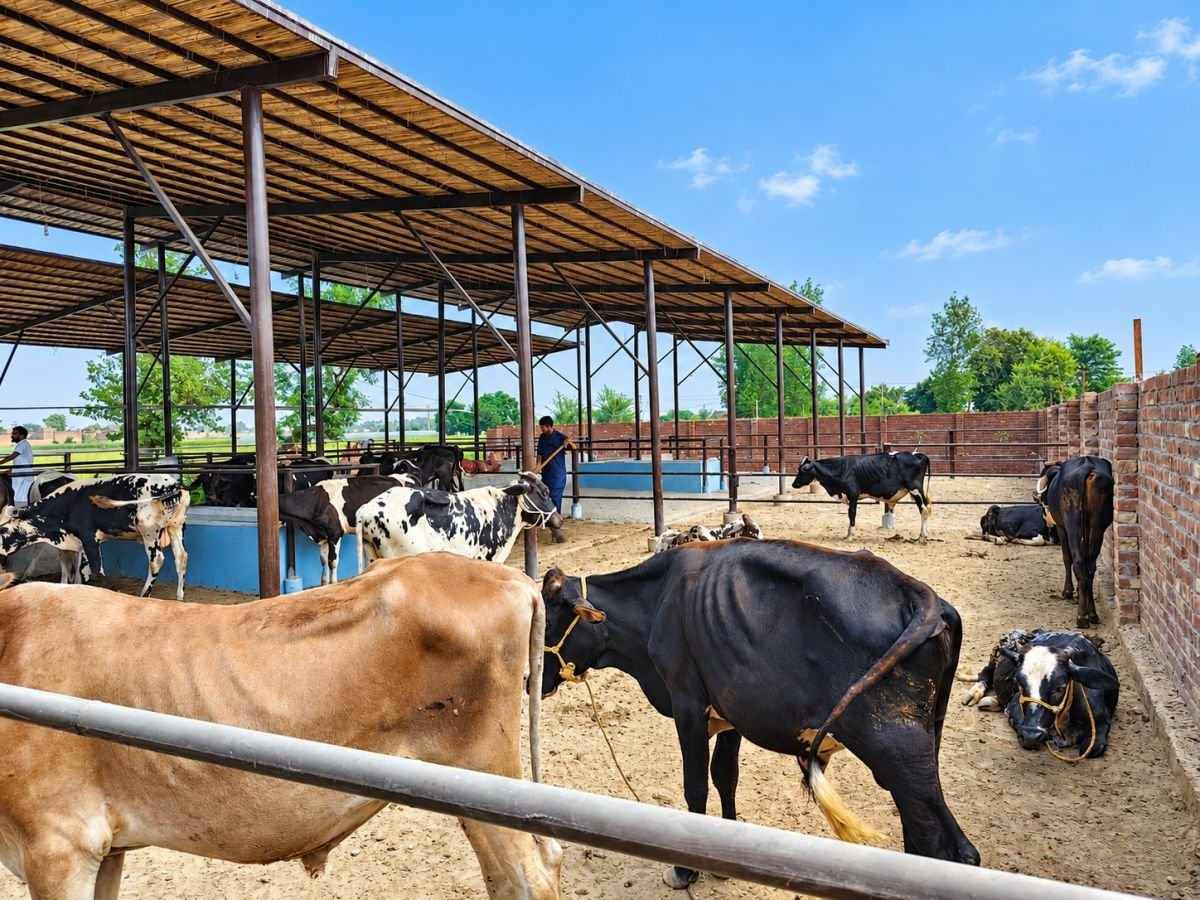
When a new animal arrives at the farm, one of the first decisions is where it will live. Farm intake means assigning every animal to a suitable pen or group — and that choice makes the rest of the cycle easier.
Every animal has a place
New livestock is introduced into the farm operation and assigned to suitable pens or groups for easier management. Animals are organised into suitable areas or groups to support more efficient daily management.
A calm, organised pen is easier to feed, easier to clean and easier to watch. Good grouping makes every other job simpler.
— Sarfraz Latif, Managing Partner
Why grouping helps
Grouping is not about tidiness. It is about making the daily routines work well for the team and for the animals.
- Feeding — each group gets its share at the feed lane.
- Water — every pen has its own trough.
- Cleaning — routine cleaning is easier pen by pen.
- Observation — changes in condition are easier to spot within a known group.
Groups and the farm cycle
As animals progress through the roughly three-to-four-month cycle, their condition and suitability for commercial sale are reviewed. Organised pens and simple farm records make that review clearer, so the team can make more informed decisions when it is time to prepare animals for buyers.

Sarfraz Latif
Managing PartnerOversees day-to-day farm management and keeps every part of the operation running to standard.